Rising labour rates and energy prices are forcing many businesses to find new ways to reduce warehouse costs without sacrificing performance. Simultaneously, organisations face persistent challenges in attracting and retaining skilled workers. Many distribution companies report difficulties hiring suitably-trained staff due to high employment rates. This combination of high labour demand and a limited supply of skilled workers exerts upward pressure on wages, retention efforts, and other associated costs. The clear upward trend in employee pay within warehouse-related sectors indicates that labour costs will continue to be a primary operational concern.
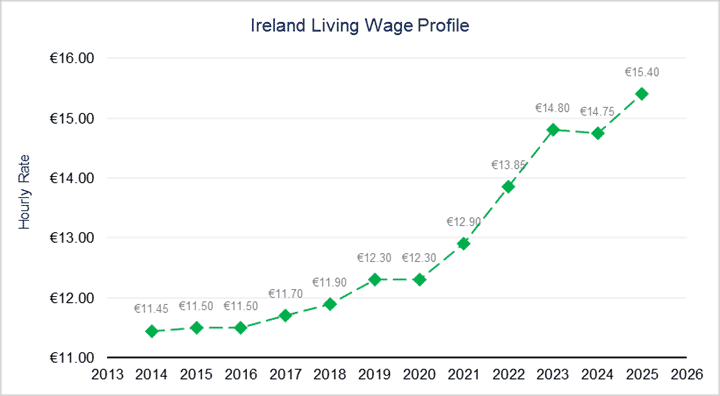
In response, most companies focus on improving the productivity and efficiency of their warehouse processes. To put this in context, warehouse operations can represent about 40 percent of total production costs. Within the warehouse, order picking is by far the most expensive activity, typically accounting for 60 to 70 percent of total operational costs. Critically, around half of these picking costs are driven by operator travel alone—an activity that contributes zero value to the final product.
While these figures may seem daunting, it is possible to counteract rising wage-related costs through targeted, scalable changes within your control. This article outlines five key strategies that warehouse managers can implement to enhance efficiency and mitigate the financial impact of increasing labour expenditure.
1. Implement a Dynamic Product Slotting Strategy
Product slotting is the process of organising items in a warehouse to optimise storage and picking efficiency. By moving high-velocity items closer to packing and dispatch stations—the “hot zone”—picker travel distance is reduced. This results in a faster order fulfilment process and a lower cost per order.
Product slotting is an excellent example of a positive compounding process, where small, incremental improvements accumulate to deliver substantial gains. Consider the impact of relocating a single popular SKU from a distant location to a prime, high-velocity position. If this adjustment saves 10 metres of travel distance per pick, approximately 7 seconds of travel time are recovered for each order containing that item. Because the SKU is popular, this single change can save several labour hours across the working week. A secondary benefit is the dissipation of congestion around slower-moving items, which improves overall workflow.
How to Implement Product Slotting
While the concept is straightforward, the implementation requires a considered approach.
- Conduct an ABC Analysis: Start with a basic ABC analysis using product characteristics from your master data, such as demand rate and dimensional data. This involves identifying the ‘A-line’ items responsible for 80 percent of pick activity, which typically represent about 20 percent of your total product profile. The ‘B’ and ‘C’ items should then be located progressively further back in the storage aisles and higher up on the racking. Most practitioners use the order-line velocity metric for this analysis, as it reflects pick frequency and ensures the most frequently picked items are assigned prime slots.
- Optimise the “Hot Zone”: Relocate your ‘A-line’ items around the hot zone, being careful to avoid creating new bottlenecks. Distribute fast-movers strategically and exploit vertical storage locations to prevent congestion.
- Account for Picking Strategy: Your slotting strategy must align with your picking methodologies, which may include discrete, case, or full-pallet picking depending on your operational needs and racking setup.
- Leverage Product Affinity: To further accelerate picking, locate items that typically ship together (product affinity) in adjacent slots.
- Treat Slotting as Ongoing Maintenance: Slotting should not be a one-off event. Cultivate a practice of continuously adjusting slots in line with changing demand. For example, allocate flexible prime locations for seasonal products, and schedule re-slotting quarterly or in alignment with seasonal demand shifts.
For a quick win, identify items that are obviously poorly located and immediately move them to the hot zone. The complexity of a full slotting project depends on your warehouse scale and available data. While modern Warehouse Management Systems (WMS) often include slotting modules that leverage advanced analytics, small to medium-scale operations can achieve effective results with standalone solutions, offering a tangible countermeasure to rising costs.
2. Introduce Robotic and Storage Automation
Warehouse owners increasingly recognise the benefits of automation in counteracting labour rate increases and reducing warehouse costs. The variety of robotic systems available today enables warehouses to achieve significant productivity gains by reducing fulfilment cycle times and minimising error rates. At a minimum, these measures can offset rising labour costs without compromising customer satisfaction.
Robotic Solutions
Rising labour costs and availability challenges are driving the rollout of robotic solutions to improve operational efficiency.
- Autonomous Mobile Robots (AMRs): AMRs are now commonplace in warehouses. Controlled by intelligent software and extensive sensory systems, these devices transport loads, perform order picking, and handle sortation tasks. Working alongside human counterparts as “cobots,” they navigate and transport goods with superior efficiency. Their high scalability brings benefits to productivity, labour costs, and safety, allowing managers to handle fluctuating demand, especially during peak seasons.
- Robotic Picking Systems: Over the past two years, robotic picking systems have improved in speed and accuracy, capable of handling a wide variety of product and package types. In some cases, they can eliminate dependencies on manual labour entirely.
- Robotics as a Service (RaaS): The RaaS model is gaining traction, making automation more accessible. This subscription-based model allows companies to lease robotic systems instead of purchasing them, reducing upfront capital expenditure and offering greater flexibility. RaaS providers manage the robots, including maintenance and updates, permitting warehouse managers to scale their automation needs in line with demand.
Automated Storage Solutions
Beyond robotics, dense storage technology can transform manual and load-bearing tasks.
- Automated Storage and Retrieval Systems (ASRS): An ASRS utilises a high-density grid structure with stacked bins that can extend to the ceiling, maximising the use of vertical space. This solution is growing in popularity as it enables businesses to reduce their working footprint and associated costs like rent, taxes, and utilities.
- System Integration: An ASRS can be integrated with other processes, including picking, packing, and shipping. When linked with a WMS, it helps to optimise stock levels, perform accurate cycle counts, and manage fulfilment waves. For example, DHL transformed its order picking using AI-powered robots, which follow optimised routes to pick orders with greater productivity and accuracy.
The investment potential and economic return of automation depend on the scale and nature of your operation. However, from AMRs to ASRS, these technologies provide a powerful lever for controlling costs.
3. Leverage Data Analytics and AI
Data analytics, artificial intelligence (AI), and machine learning are essential tools in modern warehouse management, driving more efficient and predictive operations.
- Inventory Control: Predictive analytics for demand forecasting can significantly improve inventory management. By analysing historical data, market trends, and external factors, these systems calculate future stock requirements with high confidence. This allows managers to proactively control inventory levels, gain visibility into storage requirements, and allocate labour more effectively ahead of peak periods.
- Warehouse Operations: Advanced analytics tools provide insights into optimal product placement, order-picking routes, and labour efficiency. Heat maps and spaghetti diagrams can help visualise warehouse traffic patterns, while machine learning algorithms identify potential bottlenecks. With sufficient operational data, analytics can pinpoint targeted improvements to enhance workflow efficiency.
- Warehouse Reconfigurations: Rising costs are a strong motivator for space optimisation. Vertical storage solutions like multi-level racking and mezzanines are gaining popularity as viable alternatives to site relocation. Flexible layout designs with modular shelving and reconfigurable workstations are also cost-effective solutions for changing inventory needs. A material flow assessment can often reveal opportunities to simplify conveyance and reduce operating costs through simple systems like gravity rollers.
For larger-scale reconfigurations, a digital twin representation of your warehouse can be used to simulate and test different layouts before making physical changes, helping to identify hidden cost-saving opportunities.
4. Streamline Processes with Digital Twin Technology
Digital twin technology is growing in prominence across industries due to its ability to provide virtual simulations for better operational insights and process optimisation. In supply chain management, a digital twin is a dynamic virtual replica of a physical warehouse process.
A data feed, typically from a WMS, is used to construct a real-time digital model of the warehouse layout, inventory levels, and processes. Live data from sensors can also be integrated to track traffic, product flow, and staff movement.
Once built, practitioners can run simulations to test the impact of potential changes and predict how different scenarios might affect operations. A digital twin provides in-depth analysis to help:
- Optimise work and traffic flows.
- Reduce operator travel time.
- Improve resource allocation.
- Refine warehouse configurations.
This technology allows you to test and validate any option before physical installation, providing a risk-free alternative to intuition. You can experiment with different workflows to find the most efficient layout, model the effects of changing variables (like new automation, demand shifts, or staff levels), and optimise product placement—all without disrupting daily operations. Market research reports that the digital twin market is poised for accelerated growth, and innovations in AI and machine learning have made it more accessible than ever.
5. Implement Strategic Workforce Management
Strong labour markets and low unemployment rates are driving competition for a limited pool of warehouse talent, leading to further wage growth. Since labour costs dominate operating expenses, a strong focus on employee retention and operational resilience is essential.
Consider these actions to gain greater efficiencies and reduce operating costs:
- Cross-train your workforce to perform multiple roles, allowing you to manage peaks without additional recruitment.
- Re-schedule staff using staggered or split shifts to cover busy demand periods more effectively.
- Foster a culture of continuous improvement by empowering employees to suggest process enhancements that deliver meaningful cost savings.
- Adopt incentive programmes that are tied to and validated by productivity metrics.
- Reduce employee turnover by offering robust onboarding programmes, regular training, and clear career development paths.
- Focus on process improvements and leveraging technology to increase productivity and operator morale as an alternative to headcount reduction.
FAQs
1: What are the best ways to reduce warehouse costs?
You can reduce warehouse costs by improving slotting efficiency, introducing automation, using data analytics for better forecasting, and managing your workforce strategically.
2: How can automation help reduce warehouse costs?
Automation reduces manual labour, minimises picking errors, and increases throughput, directly lowering overall operational costs.
3: What percentage of warehouse costs are labour-related?
Labour can account for up to 65–70% of total warehouse operating costs, making it a key focus area for cost reduction.
Charting Your Path Forward
The steady rise of minimum and living wages presents a significant and ongoing challenge for warehouse operations. However, by adopting a proactive and strategic approach, it is possible to mitigate these cost pressures effectively. The strategies outlined—from dynamic product slotting and automation to advanced data analytics and strategic workforce management—provide a robust framework for building a more efficient, resilient, and cost-effective operation.
Implementing these changes requires careful planning and a commitment to continuous improvement. By taking decisive action now, you can transform cost pressures into opportunities for innovation and secure a competitive advantage for the future.
If you are looking to enhance your warehouse efficiency and mitigate the impact of rising labour costs, we can help. Reach out to us today to discuss how our expertise can help you navigate these challenges and optimise your operations.
Be sure to check out some of other insightful pieces. We have pages that discuss the following topics:
Warehouse Capacity Planning
Supply Chain Enabled